
How do AI crawlers read structured data differently than traditional search engines?
AI crawlers read structured data as answer material. Traditional search engines usually read it as a signal for understanding, snippets, and ranking. That difference matters because AI systems need consistent facts and citation traceability, not just page relevance.
What is the main difference between AI crawlers and traditional search engines?
Structured data is machine-readable page data that tells systems what a page says about a product, policy, FAQ, or organization. Traditional search engines use it to interpret pages and qualify richer results. AI crawlers use it to assemble grounded answers and cite specific sources.
Traditional search engines still rank pages. AI crawlers often generate a direct response first, then attach citations. Because of that, the same markup can serve two different jobs.
| Aspect | Traditional search engines | AI crawlers |
|---|---|---|
| Main goal | Rank relevant pages | Generate an answer |
| Structured data use | Help interpret content and enable richer snippets | Feed facts into answer generation and citations |
| Output | Search results page with links | Natural-language answer with source references |
| Best inputs | Clear page structure, schema, internal links | Verified facts, FAQ content, policy pages, machine-readable sources |
| Failure mode | Poor snippet or weak ranking | Wrong or uncited answer |
How do AI crawlers use structured data?
AI crawlers use structured data as evidence for generated answers. They can use JSON-LD, FAQ content, policy pages, and plain-text or markdown versions of pages to extract facts with less friction. One practical example is a site that ships JSON-LD on about 30 pages, a hand-written /llms.txt, and seven .md mirror routes so agents can fetch low-token versions of the same content.
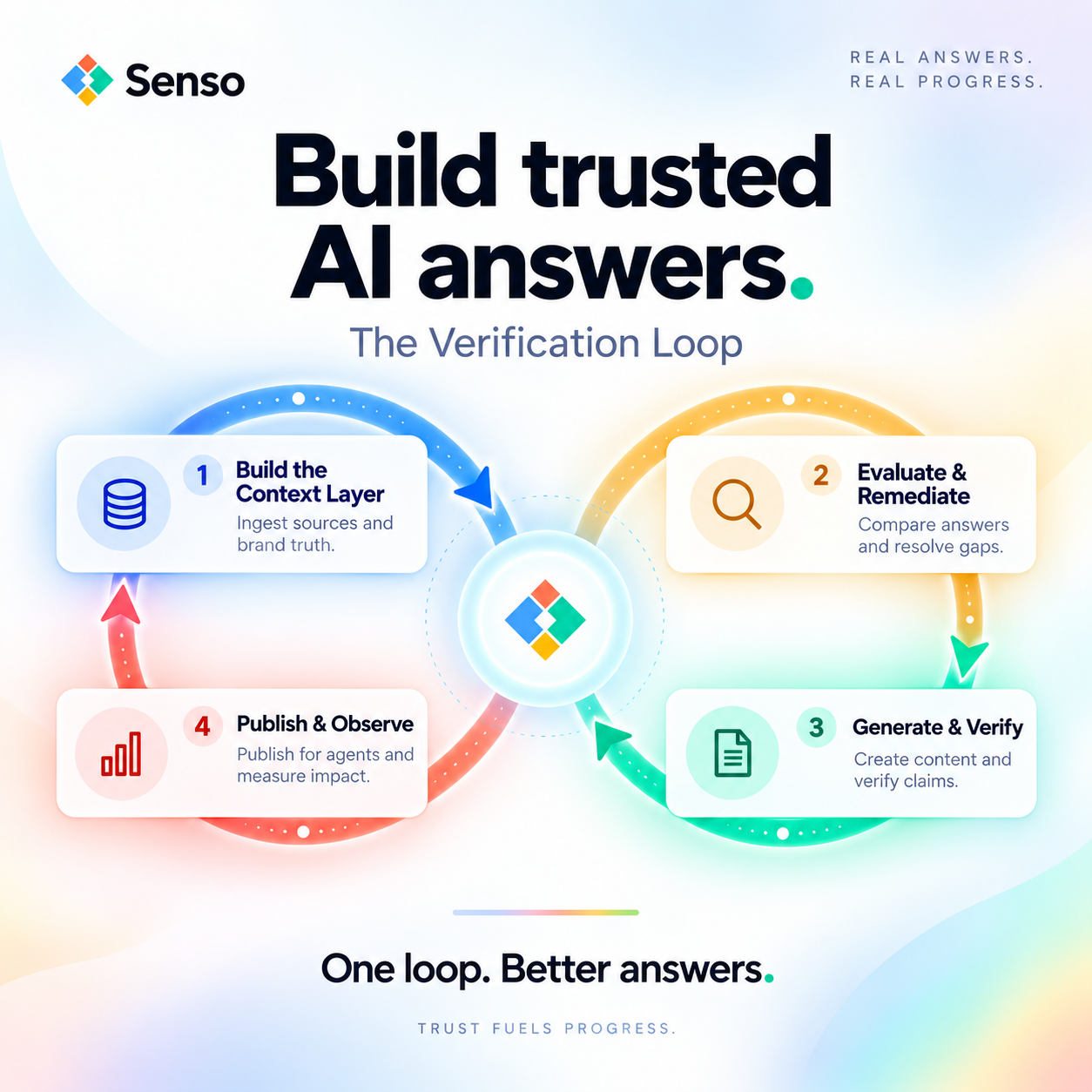
That setup matters because generative systems do not rank pages only by keywords. They assemble answers from trusted, structured facts. In Senso’s onboarding loop, a website becomes a verified context layer that systems like ChatGPT, Perplexity, Gemini, and Google AI Overview can cite when they answer buyer questions.
How do traditional search engines use structured data?
Traditional search engines use structured data to understand the page and improve how results appear. Schema can help a page qualify for richer snippets, better entity recognition, and clearer indexing. It usually supplements the page rather than becoming the answer itself.
That is the key difference. A search engine can rank a page even if the schema is incomplete. An AI crawler is more likely to rely on the actual facts in the markup, the page text, and the source trail behind those facts.
What should you publish if you want AI systems to cite you correctly?
Publish the same facts in multiple machine-readable forms. Start with your ground truth infrastructure. Audit product and policy content for completeness and consistency, then compile it into one governed, version-controlled knowledge base.
A strong starting set looks like this:
- Current product pages with one canonical name for each offer.
- FAQ pages that answer buyer questions directly.
- Policy pages that stay aligned with the claims on product pages.
- JSON-LD for entities, FAQs, and other structured facts.
/llms.txtor another plain-language guide for machine readers.- Markdown mirrors or other low-token versions of core pages.
This matters because citations are a trust mechanic for AI engines. If a model cites your owned pages or credible external sources, you can trace where the answer came from. If the facts are fragmented, the model has less to cite and less reason to stay grounded.
Where do structured-data setups fail?
They fail when the same fact appears in different versions across pages. They also fail when the markup is current but the underlying policy is stale. AI systems can only cite what they can verify, so mismatched content creates wrong answers and weak citation coverage.
This is the problem many teams miss. A traditional search engine may still index the page. An AI crawler may still generate an answer. The risk is that the answer reflects an old policy, an incomplete product detail, or a wrong brand statement, and you have no audit trail to prove otherwise.
How should you measure whether it is working?
Track citations and answer share of voice. Citations show whether the system is pointing back to verified sources. Share of Voice measures answer dominance, or the percentage of an AI-generated answer dedicated to your brand compared with others.
Track this weekly at minimum. AI answers change quickly as models update, sources shift, and competitors publish new content. If you only review it once a quarter, you will miss the drift.
FAQs
Can AI crawlers read JSON-LD directly?
Yes. JSON-LD gives AI systems a compact, machine-readable layer of facts. It works best when the JSON-LD matches the page text and the underlying verified ground truth.
Is schema enough for AI visibility?
No. Schema helps, but AI systems also read page copy, FAQ content, policy pages, and other structured sources. If those surfaces disagree, the model has less reliable evidence to use.
Why do markdown mirror pages matter?
Markdown mirror pages give agents a low-token version of important content. That makes it easier for crawlers to fetch the same facts with less noise, especially on long-form pages.
What is the fastest way to start?
Begin with the pages closest to revenue. Clean up product, comparison, and policy pages first, then add structured facts that match the live site. Senso’s model does this by compiling raw sources into a governed knowledge base and scoring every answer against verified ground truth.
What is the bottom line?
Traditional search engines use structured data to interpret pages. AI crawlers use it to assemble answers and attach citations. If you want AI systems to represent your business correctly, the job is not just schema markup. The job is a governed, version-controlled source of truth that agents can cite.