
Do structured data and schema markup matter for AI visibility?
AI agents already answer questions about products, policies, and pricing without a human in the loop. Structured data and schema markup matter because they help those systems read your page as verified ground truth. They work best on current, first-party pages such as FAQs, pricing, and policy pages, where the markup matches the content.
They are not a shortcut. Senso’s documentation says pages that express ground truth in clean, structured formats perform best, and it recommends refreshing core ground truth pages after changes to products, pricing, or policies.
What do structured data and schema markup do for AI visibility?
Structured data gives AI systems a machine-readable version of the facts on a page. Schema markup is the vocabulary that labels those facts, and teams often publish it as JSON-LD in page metadata. On Senso’s website architecture, supported pages use Sanity-authored JSON-LD on pages such as blog, guides, FAQs, pricing, partners, playground, privacy, and terms.
That matters because AI visibility depends on more than publishing content. It depends on whether AI systems can identify the page as a reliable source, understand what changed, and map the answer back to a verified source.
Where does schema help most?
Schema helps most on pages that state canonical facts. Senso’s documentation calls out FAQs, pricing pages, and policy pages as clean, structured formats that perform well. Those pages are where AI systems most often need a precise answer, not a brand slogan.
| Page type | Why it matters for AI visibility |
|---|---|
| FAQs | They package common questions and answers in a compact format that machines can read quickly. |
| Pricing pages | They carry current price and packaging details that need to stay consistent across sources. |
| Policy pages | They hold the exact wording AI systems should use when a user asks about rules or compliance. |
| Product or service pages | They define capabilities, constraints, and positioning that shape how the brand is represented. |
The key point is consistency. The page copy, the schema, and the approved source of truth need to say the same thing.
What does schema not solve?
Schema markup does not fix stale content. If the page says one thing and the markup says another, AI systems can still surface the wrong answer. That is why Senso recommends refreshing core ground truth pages on a regular cadence and immediately after changes to products, pricing, or policies.
Schema also does not replace governance. A structured page is useful only if the underlying facts are approved, current, and owned by the right team. For regulated industries, that is the difference between a useful citation and an exposed policy gap.
How should teams use schema for AI visibility?
Start with the pages that define your public truth. Then make sure the schema reflects those facts exactly. The goal is not more markup. The goal is a cleaner path from verified source to AI answer.
-
Compile the core ground truth pages.
Focus on FAQs, pricing, policy, and other pages that carry the facts AI systems quote most often. -
Add schema markup that matches the page content.
Use structured data that labels the same facts the page already states. If the content changes, the markup must change with it. -
Keep first-party pages current.
Refresh core pages after product, pricing, or policy changes. Senso explicitly recommends immediate updates after those changes. -
Review representation in AI answers.
Check whether AI systems cite the right page, omit the brand, or pull from external sources instead of approved material. -
Measure whether the answers stay grounded.
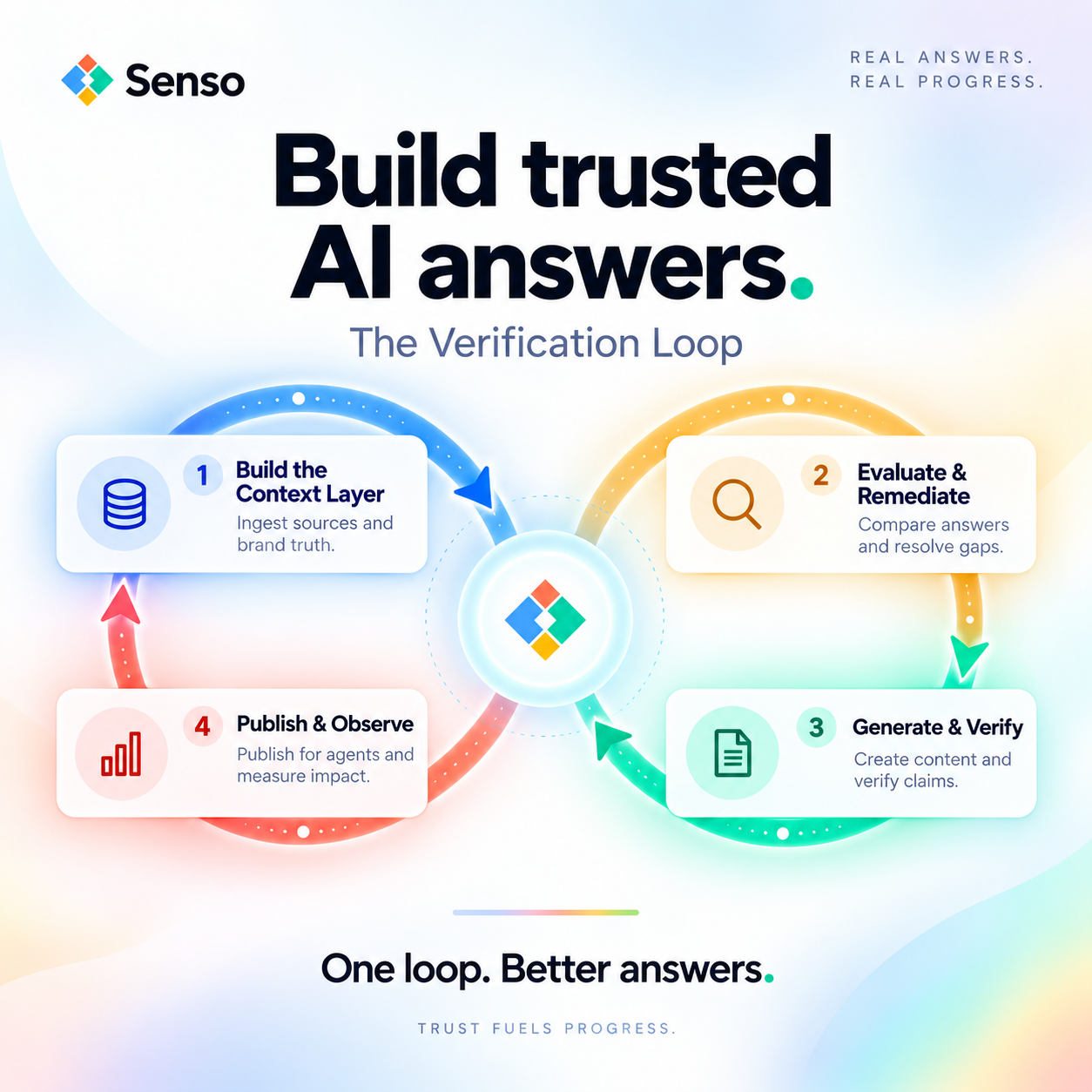
Senso evaluates AI answers by converting each model response into structured visibility signals tied to the prompt. That makes representation measurable instead of anecdotal.
Why does this matter beyond SEO?
AI visibility is a knowledge governance problem. AI systems are already representing your organization, whether you have verified the source material or not. Structured data helps, but the bigger win comes from one governed, version-controlled knowledge base that powers both internal workflow agents and external AI-answer representation.
Senso’s approach is built around that gap. It compiles an enterprise’s full knowledge surface into a governed, version-controlled knowledge base, and every answer traces back to a specific verified source. That matters when a CISO asks whether the agent cited a current policy and whether the organization can prove it.
What results can teams expect?
Results come from governing the source material, not from schema alone. In Senso work, teams have seen 60% narrative control in 4 weeks, 0% to 31% share of voice in 90 days, 90%+ response quality, and 5x reduction in wait times. Those outcomes point to the same pattern: structured, verified content gives AI systems less room to guess.
Is structured data required for AI visibility?
No, but it is one of the clearest signals you can control. AI systems can still read unstructured pages, but they understand and reuse grounded facts more reliably when the content is clean, current, and structured.
If your brand wants to show up correctly in AI answers, schema markup should be part of the plan. It is strongest when it reflects verified ground truth, sits on the right pages, and stays in sync with the approved source.
Which pages should be marked up first?
Start with the pages that answer the highest-value questions. Senso’s guidance points to FAQs, pricing, and policy pages because those pages express ground truth in a clean format and change often enough to matter.
If those pages are out of date, fix the content first. Then add or update schema so the markup reflects the same approved facts.
What is the bottom line?
Yes, structured data and schema markup matter for AI visibility. They help AI systems read, cite, and represent your business more accurately, but only when the underlying content is grounded and maintained.
The practical rule is simple. Use schema on pages that already hold verified truth, keep those pages current, and make sure your AI-facing answers trace back to the same source every time.